
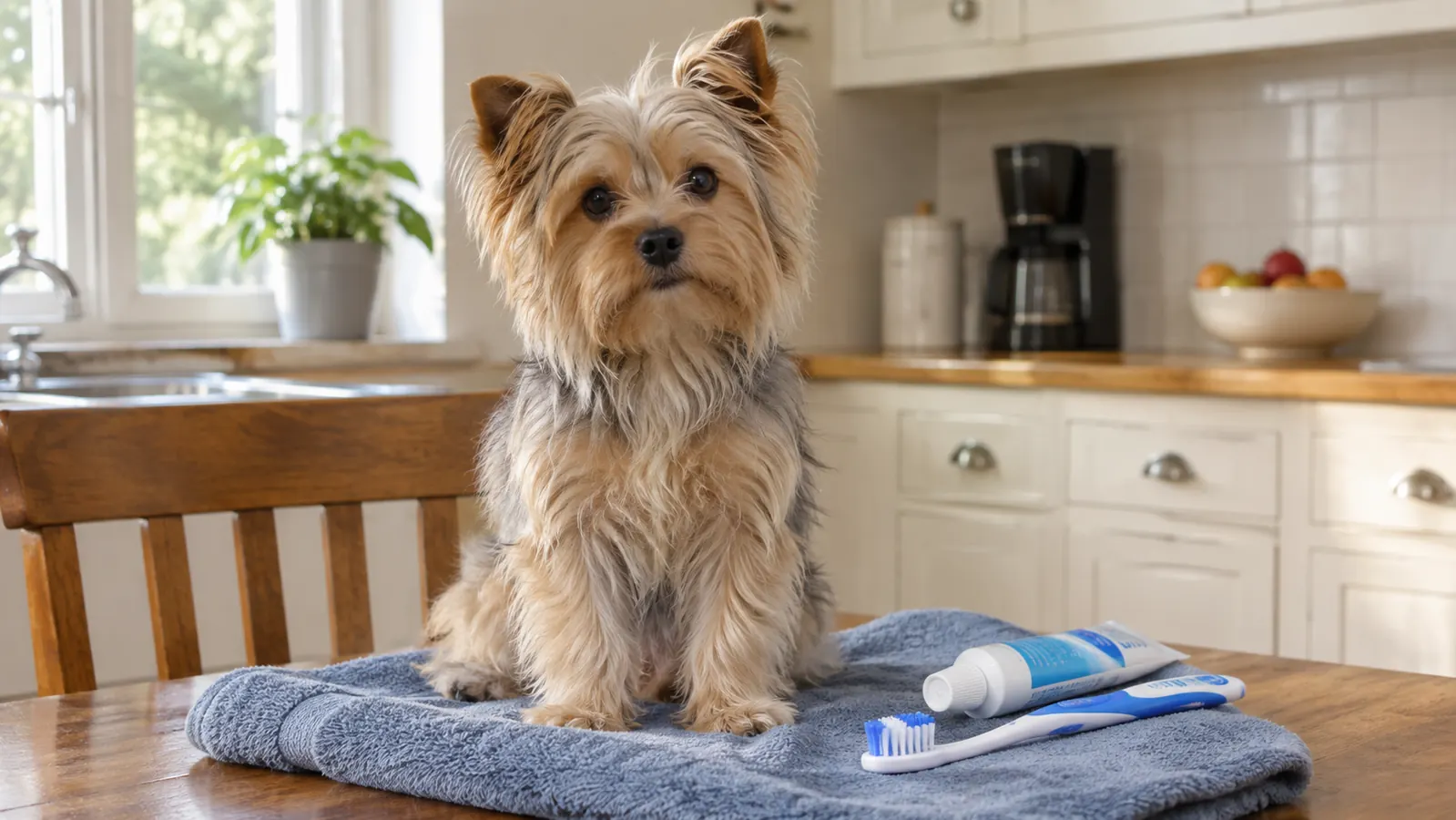
Lulu is seven pounds of Maltese with a long white coat, a puppy cut most of the year, and breath that had gotten bad enough to notice from across the room. I first caught it in May, when she climbed into my lap after supper and turned her face up toward mine. I leaned back before I could stop myself. She looked at me as if I had insulted her personally. That was the whole reason I ordered the Vet's Best Dog Toothpaste and Toothbrush Dental Care Kit in June. No veterinarian had warned me. No article had scared me. Just a small dog who suddenly smelled like something had spoiled behind the couch.
I am 63, retired from a church office, widowed, and I live alone in a one-story brick ranch house in Roanoke, Virginia. It is me and one dog, and I keep the place tidy. The couch is hers. The bed is hers. Her breath landing on my face at nine o'clock at night is where I finally drew a line. So I started brushing her teeth after our supper, sitting on the kitchen floor with her in my lap, and I have kept at it most nights for five months now. This is the honest account of what that has been like, including the parts I do not care for.
The Quick Verdict
A 3.5 ounce banana gel and a three-sided brush that got a fussy seven pound dog to sit through a minute of brushing a night. Her breath improved inside two weeks and the veterinarian noticed the difference at her checkup. It will not replace a dental cleaning, and the brush head runs wide for a very small mouth.
Amazon Check Today's Price →One tube, one brush, and the easiest minute of our evening
Five months of nightly brushing and the tube still has paste in it. Lulu now climbs into my lap on her own and licks the brush before I get it near her teeth. If your dog's breath has started carrying across the room, this is the least dramatic place to start.
Amazon Check Today's Price on Amazon →How I've Used It
The kit arrives as one tube and one brush. The tube holds 3.5 ounces of banana-flavored gel. The brush has three heads set at angles so that a single stroke covers the front, the top and the back of a tooth at once. That design is the reason I chose this kit over a plain toothbrush and paste. Lulu's mouth is small, her patience is smaller, and anything that shortens the job is worth having in the drawer.
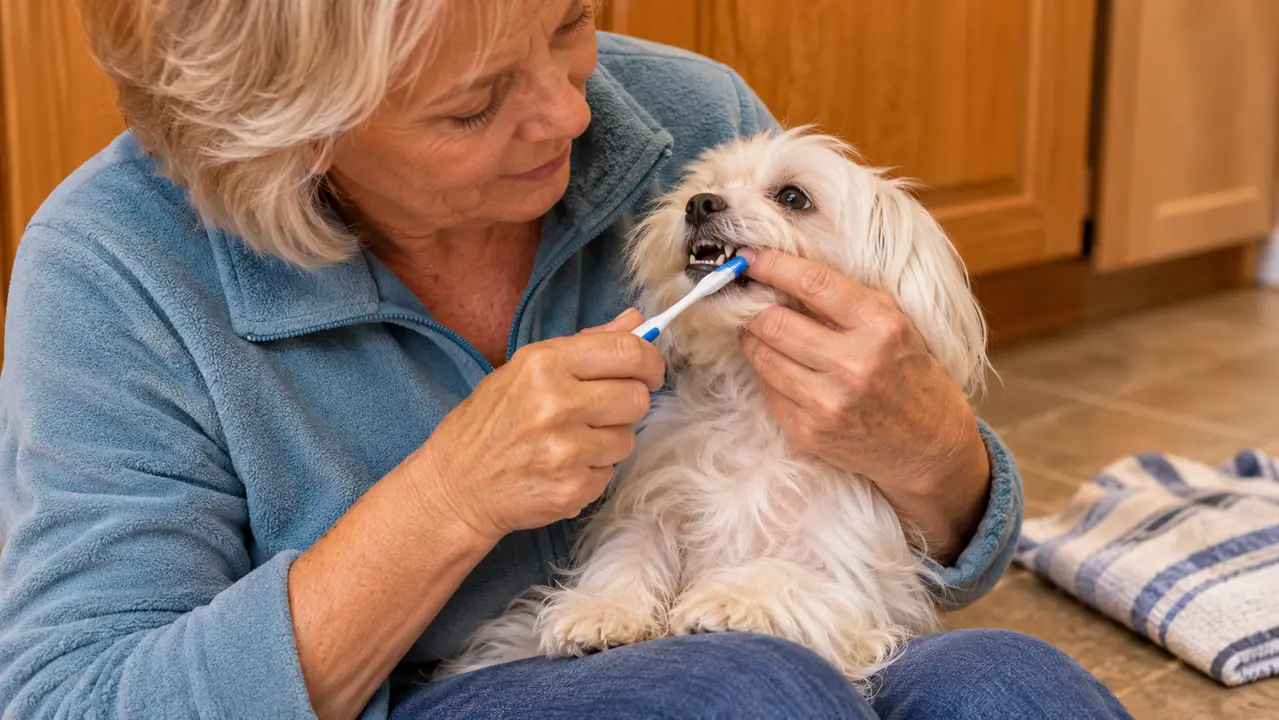
Our routine is fixed, and the fixed part is what makes it work. We eat supper. I rinse the plates. Then I sit down on the kitchen floor with my back against the lower cabinet, put Lulu in my lap facing away from me, and lift her lip with one thumb. About a minute, most nights. I go along the outside of the back teeth on both sides first, because that is where I can see the buildup, then the front teeth, then a quick pass along the inside. She gets one piece of her own kibble afterward, held back from her dinner. Not a jar treat. Just a small payment for services rendered.
The first two weeks were not smooth. She clamped her jaw shut, turned her head away, and one night she simply stood up and walked out of the kitchen, which is her way of ending a conversation. What worked was not holding her down. I put a smear of the paste on my finger and let her lick it, twice a night for a few days, so the banana smell stopped being suspicious. Then I brought the brush in with paste already on it and only did the front teeth. By the third week she was climbing into my lap on her own before I had even sat down properly.
What Is Actually in the Tube
The label lists aloe, neem oil, baking soda, glycerin, pectin and grapefruit seed extract, and the packaging describes the formula as free of the harsh chemicals many dog toothpastes carry. I am not a chemist and I will not pretend to be one. What I can tell you is how it behaves on a dog. It is a soft gel rather than a gritty paste, and it does not foam the way human toothpaste does, which matters because a dog cannot spit and should not be rinsing anything down.
The baking soda and neem oil are there for plaque removal and fresher breath, and that matches what I saw in my own kitchen. It is a cleaning gel. It is not a treatment. If your dog has red or swollen gums, a loose tooth, or breath that has not improved after several weeks of faithful brushing, that is a veterinarian appointment, not a bigger tube of toothpaste. I am plain about this because I have read reviews from people who expected a kit like this to fix something that actually needed a proper cleaning and probably an extraction.
Banana is the flavor, and it smells like real banana, sweet with a slightly artificial edge the way all dog products do. Lulu likes it. She licks the brush before it is anywhere near her back teeth. That matters more than any ingredient panel, because a toothpaste a fussy dog refuses is a toothpaste that lives in the drawer until it dries out. I have owned that toothpaste, and it was not this one. This is the first dental product I have bought for her that she treats as a treat.
The Triple-Sided Brush and a Small Dog's Mouth
The brush is the part I have the most mixed feelings about. Three heads, angled to wrap around a tooth, so one stroke cleans three surfaces. On a bigger dog I imagine it works beautifully. On a seven pound Maltese the head is roughly the width of two of her teeth, so I am covering less ground per stroke than the shape suggests. The design promises more than a toy breed's mouth can accept.
And yet the angles do help. With a flat brush I was constantly rolling my wrist to reach the outside of the back molars, and every time I repositioned, Lulu pulled away. With this one I can hold the handle at a single angle and let the head do the work. It also means I do not have to pry her mouth open, which she despises. The handle itself feels light and plasticky in the hand, and I wondered in June how many months it would last before the bristles splayed out. Five months in, the bristles are still standing.
One practical note for a toy breed. The brush head is firm. If your dog has sore gums, or if you are starting with a puppy, go slower than feels necessary. A soft finger brush for the first week or two is a reasonable bridge before you hand this one over to a small mouth. I did not need that bridge with Lulu, but I would have used it if she had flinched.
Five Months of Nights: What Changed
The first change was the breath, and it came inside about ten days. Not dramatic. Just the smell of a mouth instead of the smell of something spoiled. I noticed it on a Tuesday, when she yawned in my face on the couch and I did not lean back. That was the entire test, and she passed it.
The second change turned up at her checkup in September. The veterinarian looked at her teeth, paused, and asked what I had changed at home. I told her about the nightly brushing and she said to keep doing it. That is the closest thing to a professional endorsement I can honestly offer, and it is the reason I bothered to write any of this down. She also said, in the same breath, that brushing does not replace a proper cleaning under anesthesia when the time comes for one. I believed her then and I believe her now. A home routine buys time and keeps things from getting worse. It does not do the job a dental cleaning does.
The third change is the one I did not expect. Lulu now stations herself on the kitchen floor beside me at night, waiting. She has decided this is part of the evening, the same way supper and the last trip outside are part of the evening. I did not train that. Five months of the same minute at the same time of day did it, and it is the strongest argument I can make for picking one product and one routine and simply staying with it.
The Parts I Don't Love
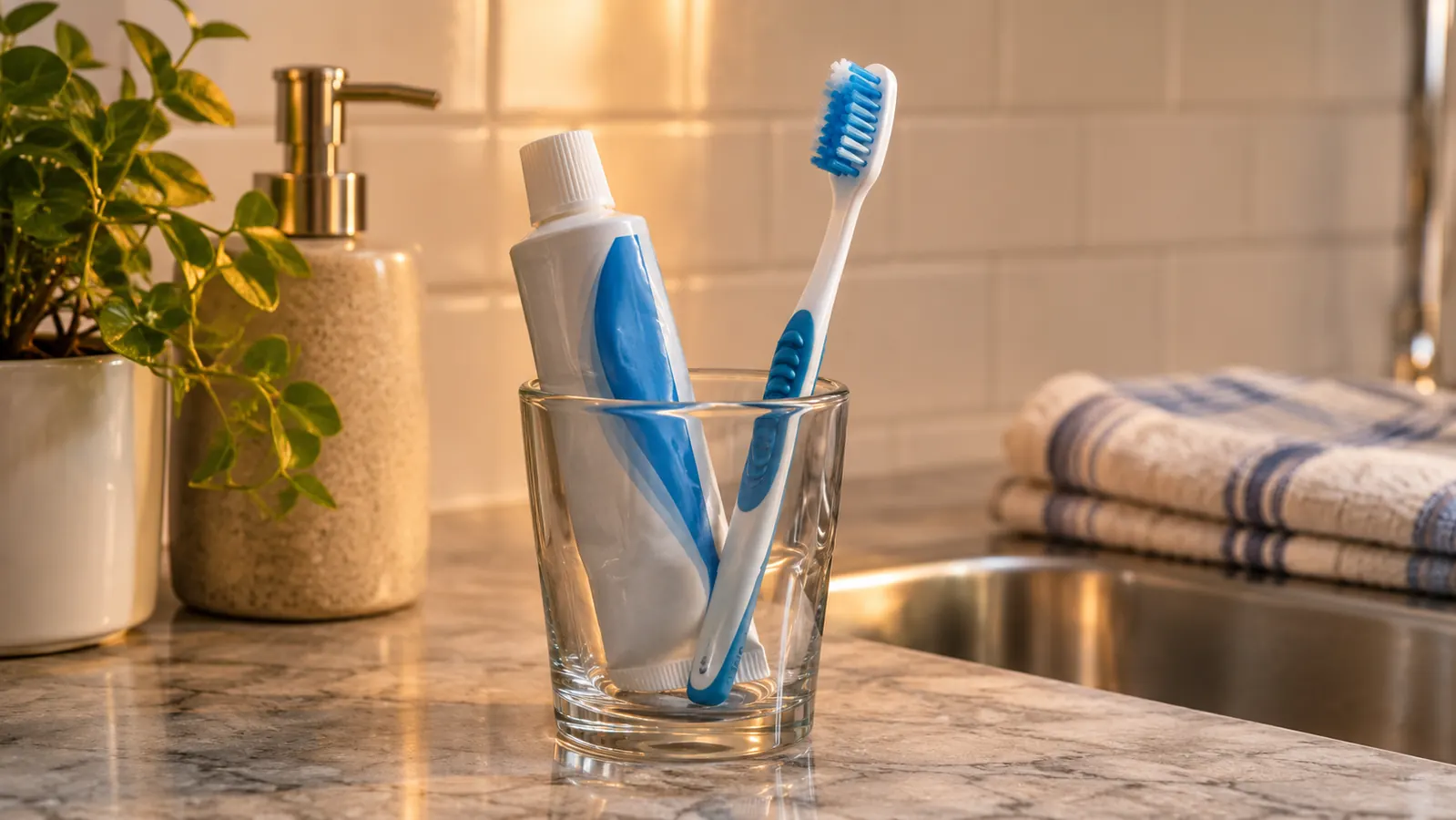
The tube is a tube. That means the final portion of it will be a wrestling match with a rolling tube and a dog balanced in my lap. A pump would be easier on old hands. The gel also dries hard on the bristles if you do not rinse the brush under the tap afterward, which I found out after a week of setting it down still loaded. Now the brush gets rinsed and stood in a small glass in the cabinet beside the sink, next to the tube, so neither of them rolls anywhere.
The bigger limitation is this: the Vet's Best kit will not fix a mouth that already needs help. If your dog has brown tartar cemented along the gum line, brushing at home will not lift it off, no matter how faithful you are. That is scaling, and scaling is a veterinary procedure. I say this as a woman who wanted a cheap fix and found a manageable one instead. There is a real difference between keeping a mouth clean and cleaning a mouth that has gone years without it.
What Else We Do Between Brushings
Brushing is one piece of a routine, not the routine. Lulu gets a bath in the kitchen sink every two to three weeks with the whitening shampoo I keep under there, and her coat gets brushed out on a towel on the kitchen table most evenings. The eye wipes and the nail grinder are separate jobs on separate days. None of it takes more than fifteen minutes on a busy night, and all of it happens in the same corner of the same kitchen, which I think is why the dog tolerates the whole program. Dogs are not fools. They know what is coming and where.
If you are shopping across kits, I also looked hard at the Arm and Hammer dental kit before I bought this one. Both are toothpaste and brush combinations and both will get the job done. For me the decision came down to the three-sided head and the banana flavor, because Lulu is fussy and I needed every advantage I could buy. If your dog is easygoing and will let you brush with anything, a plain soft brush and a tube will do the same work. The kit is not magic. It is just well suited to a difficult customer.
What I Liked
- Banana gel that a fussy seven pound dog will lick straight off the brush
- The three-sided head shortens brushing to about a minute a night
- The 3.5 ounce tube has covered five months of nightly use and is still going
- Made with aloe, neem oil and baking soda, and described as free of harsh chemicals
- Her breath improved within two weeks and the change has held
- The veterinarian commented on cleaner teeth at her September checkup
Where It Falls Short
- The brush head is wide for a toy breed's mouth
- The plastic handle feels light and inexpensive in the hand
- Tube packaging gets awkward near the end
- Will not remove established tartar or replace a dental cleaning
- No soft option included for a dog with sore gums
Ten days in, she yawned in my face on the couch and I did not lean back. That was the whole test.
Who This Is For
This kit is for the owner of a small dog whose breath has started to announce itself before the dog does. It suits someone who is already doing the brushing, the bathing and the nail trimming at home between salon visits, and who wants the dental piece to take one minute rather than five. It is especially good for a fussy dog, because the banana flavor does a lot of the persuading for you, and for an older owner who wants both hands free and a short job. If you have been meaning to start brushing and keep putting it off because your dog hates it, the Vet's Best kit is a reasonable first attempt. It was for me.
Who Should Skip It
Skip it if your dog already has visible brown tartar along the gum line, red or bleeding gums, a loose tooth or breath that has been bad for years. Those are not brushing problems and this tube will not solve them. Book the veterinarian first. Skip it too if you have a very large dog with a broad mouth, because the brush head that is oversized for Lulu will be undersized for a Labrador, and you will spend more time per tooth than the design saves you. And skip it if you know in your heart you will not do it most nights. A kit that stays in the drawer is worse than no kit at all, because it lets you believe the problem is handled when it is not.
Bad breath is the easiest thing in this house to fix, and it took me five months to believe that
One tube, one brush, one minute after supper. Her breath stopped carrying across the room inside two weeks, and the veterinarian noticed the rest at her checkup. That is as much as a toothpaste can honestly promise, and it was enough for us.
Amazon Check Today's Price on Amazon →