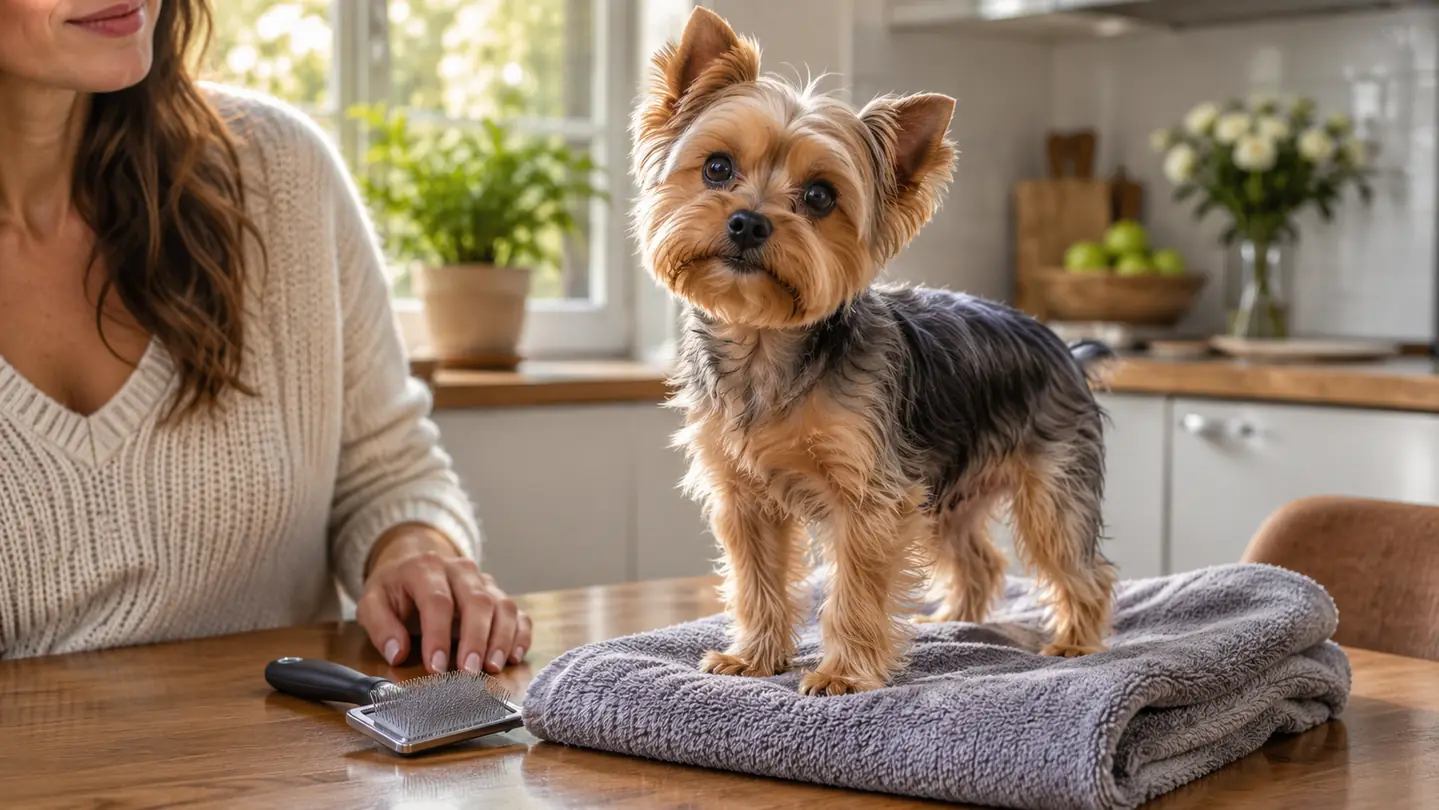
Lulu has a coat that looks effortless and is not. She is a 7-year-old Maltese, about seven pounds, and she wears a short puppy cut most of the year because I got tired of fighting the brush every morning. The mats still show up behind her ears and in her armpits no matter what I do. For a long time I assumed the problem was my technique. It was partly my technique. It was mostly the brush.
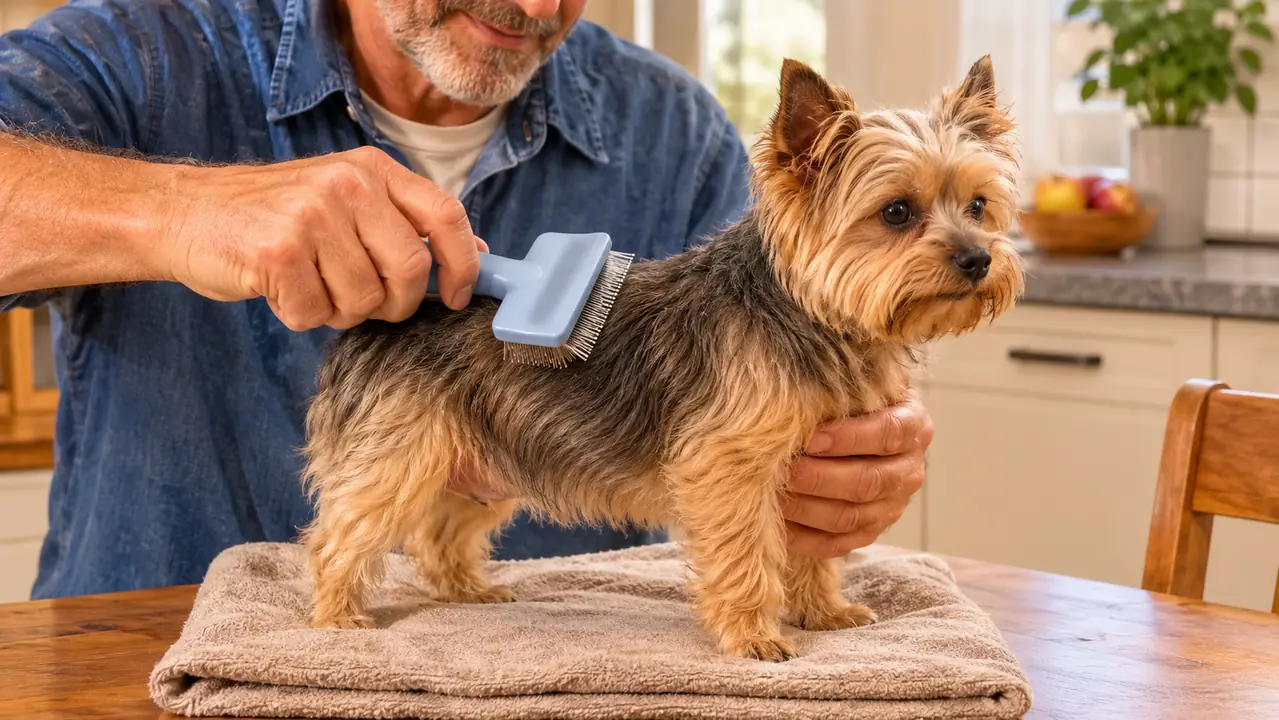
I bought the Coastal Pet Li'l Pals slicker brush last fall, about a year before I am writing this, after my groomer pulled the fur back behind Lulu's left ear and showed me a knot the size of a pea that I had been brushing straight over for weeks without noticing. What follows is what roughly a year of using it has taught me: five to ten minutes most evenings, on a folded bath towel on the kitchen table, working in small sections, always behind the ears, the armpits and the backs of the legs.
The Quick Verdict
Small enough for a seven-pound dog, gentle enough that Lulu stopped walking off the towel, and honest about what it can do: it loosens tangles and lifts loose hair, but it will not cut a mat out for you.
Amazon Check Today's Price →The brush that ended the behind-the-ear argument
A small slicker with flexible wire pins and plastic-coated tips, built for a small dog's body instead of a Labrador's. If your dog is under about fifteen pounds, this is the size that fits.
Amazon Check Today's Price on Amazon →How I've Used It
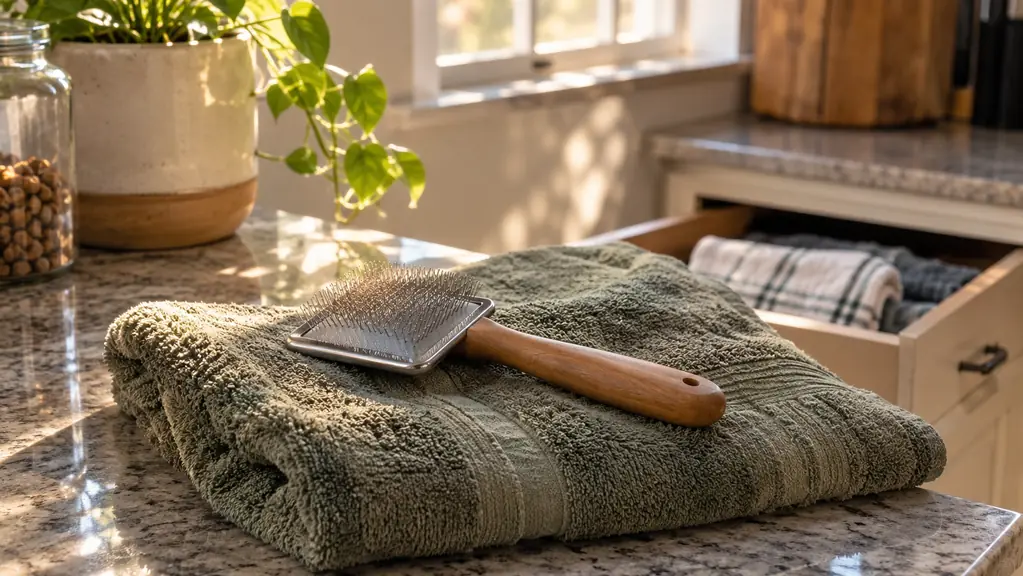
The brush lives in the kitchen drawer next to the dish towels, which tells you how often it comes out. After Lulu eats and I wipe down the counter, she gets up on the towel and waits, because she knows the routine and because she knows a small piece of something comes after. I start behind the right ear, work down the back in short strokes, do the armpits with the brush held almost flat against her, then finish with the backs of the hind legs where the fur rubs together when she walks.
Five to ten minutes is the honest number. In the beginning it was three, because she would leave. The plastic tips are the reason she stays. The pins are wire, but every one of them is coated at the end, so the brush is not dragging bare metal across her skin. On a seven-pound dog with a coat you can see through in places, I could feel the difference in the first week. The old brush I had been using felt like a rake by comparison.
One thing I want to be plain about, because it took me a year to be plain about it: this brush does not remove mats. It loosens tangles and pulls out loose hair, which is exactly what the listing says it does, and no more. When I find a real knot behind an ear, I work it apart with my fingers first, a little at a time, and if it will not come, it waits for the groomer. Brushing hard over a mat accomplishes nothing except teaching your dog that the brush is a thing to be avoided.
The order of the strokes matters less than people think. What matters is that you go in small sections and that you stop while the dog is still willing. I learned that with a comb and a lot of wasted evenings. The Coastal brush made the lesson cheaper.
How the Coated Tips Change the Experience
A slicker brush is wire pins on a rectangular head, and the whole question is what happens at the end of each pin. On this Coastal brush, every wire pin has a plastic coating at the tip. That sounds like a small detail until you own a dog whose coat you can see skin through. Lulu's coat is fine and there is not much between the brush and her.
The pins are also flexible, which matters more than I expected. They give when they hit a curve, so the brush follows the shape of the dog instead of scraping across the top of it. On the armpits and the flanks, where the body turns sharply, a stiff brush rides over the fur and skips what is underneath. This one bends into it.
I have also used it on the crown of her head, where the fur is shortest and the skin is thinnest, and it does not scratch. That is the test I use for any brush now. If it cannot go over the top of her head without her flinching, it does not belong in the drawer.
The listing says the brush is meant to stimulate natural oils and distribute them through the coat. I can only tell you what I see: after a session her coat looks smoother and sits flatter, and it stays that way into the next day. I would not call that a treatment. I would call it the result of getting the loose hair off and the coat lying in one direction.
The Size Is the Whole Point
The head measures 3.25 inches by 7.25 inches and the whole brush weighs under an ounce. For a person with large hands and a small dog, that is right at the edge of comfortable. I have medium hands and it works for me. My daughter, who has bigger hands, picked it up once and said it felt like holding a pen cap.
But the size is the reason I bought it and the reason I still reach for it. A full-size slicker on a seven-pound Maltese covers her whole ribcage in one stroke, which means you are brushing past the places that need attention instead of into them. A small head lets me work a two-inch section behind an ear, see what I am doing, and stop before I irritate her.
It also fits in the drawer, in the little bag that goes to the groomer with us, and in my hand for ten minutes without my wrist complaining. For a small dog, a small brush is not a compromise. It is the correct tool, and I wish I had stopped buying the bigger ones years ago.
What It Does Well and What It Does Not
What it does well: it lifts loose hair off a coat that sheds little but tangles easily, it smooths the surface, and it gets through the everyday snarls that form behind the ears and under the front legs. After a year of near-daily use, the fur behind Lulu's ears is short and flat instead of clumped, and my groomer has stopped bringing up mats at every single visit.
What it does not do: it does not cut through a mat, it does not fix a coat that has been left for two weeks, and it does not stand in for a bath and a comb on a dog that has been out in the rain. It also does not clean itself. Loose hair collects in the pins and you pull it out with your fingers after every session, and once a week I go through it properly with a spare minute at the sink. If you skip that, the brush stops working as well and you will blame the brush.
There is also a limit to how long a session should run. Ten minutes on one small dog is plenty. If I keep going because I want the coat to look perfect, she gets up and leaves, and she is right to.
Where It Fits in the Rest of the Routine
The brush is one step, not the whole program. Lulu gets a bath in the kitchen sink every two to three weeks between groomer visits, and brushing before the bath is what makes the bath go quickly. Brushing after, once she is dry, is what makes the coat sit flat. The two together do more than either one alone.
The rest of the routine stays separate and I keep it that way. Eye wipes in the morning for the dampness under her eyes, which has lightened the staining at the edges but has not erased what was already there. Nails every two weeks with a grinder, because she yelped once with clippers and I was not going to do that twice. Teeth at night, about a minute, sitting on the kitchen floor with her in my lap. None of that is this brush's job and I would not pretend otherwise.
What the brush does is buy me time. When the coat is brushed out, the bath rinses cleaner, the fur stops falling into the eye area, and the groomer visits stretch. Before I had a brush that fit her, we went every six weeks and still found mats. Now we go every eight to ten and she comes home with the same cut she left with.
The one thing I would change about my own routine is starting earlier in the evening. I spent two years brushing a coat that was already tangled, which is the hardest possible order to do it in. Ten minutes on a coat that is mostly clear beats an hour on one that is not, every time.
After a Year, What Has Held Up
The handle is plastic and it has a few light scuffs from living in a drawer with a can opener. Nothing has cracked, no pin has bent out of line, and no tip has come loose. I check the tips every few weeks with my thumb, because a coating that wore away would turn a gentle brush into a sharp one, and after a year of near-daily use I have not found a single one worn through.
I have washed it once, in warm water with a drop of dish soap, and let it dry on the towel overnight. The pins came out fine. I would not soak it and I would not put it in a dishwasher, but that is my own caution, not something printed anywhere I can point you to.
The brush did not fix Lulu's coat. Time, a bath schedule, a groomer who trims the matted spots out, and a brush small enough to get behind an ear did that together. What the Coastal brush did was make the daily part easy enough that I actually do it, which is most of the battle with a dog who would rather be on the couch.
What I Liked
- Small head and under an ounce, sized for a dog under about fifteen pounds
- Plastic-coated tips on every wire pin, gentle on a thin coat
- Flexible pins follow the curve of the armpits and flanks instead of riding over them
- No bent pins, cracks or worn tips after a year of near-daily use
- Cheap enough to keep one in the kitchen drawer and one in the grooming bag
Where It Falls Short
- Does not cut or remove mats, you still need your fingers or the groomer
- Loose hair collects in the pins and has to be pulled out by hand after every session
- The small handle is cramped if you have large hands
- Nothing on the brush holds the hair, so it ends up on the towel and the floor
The mats behind her ears went from a weekly fight to a two-minute check, and the only thing that changed was the size of the head and the coating on the pins.
Who This Is For
You have a dog under about fifteen pounds with a coat that tangles, and you are doing the brushing yourself between groomer visits. Maltese, Shih Tzu, Yorkie, Bichon, Havanese, Pomeranian, toy poodle, or a puppy of a larger breed who will not hold still for a full-size brush. You want a tool small enough to work one section at a time and gentle enough that the dog stops treating it as something to escape from. You are willing to give it five minutes most evenings and to pull the hair out of the pins when you are done.
Who Should Skip It
If your dog is over about twenty pounds, or has a dense double coat that needs an undercoat rake, this is not the tool. The head is too small and you will be there all evening. If your dog's coat is already matted down to the skin, do not buy a brush, book the groomer, because no slicker removes a pelt. And if you want a brush that does the work in one pass while you watch television, this is not that either. It is a small brush for small sections, used deliberately.
One more honest note: if you have large hands, hold one before you commit. My daughter found it fiddly and went back to her own brush. I do not find it fiddly, but I have smaller hands and I am only brushing seven pounds of dog.
If your dog is under fifteen pounds, this is the size that fits
Flexible wire pins, plastic-coated tips, a head about the width of two fingers. A year in, it is still the brush I reach for every evening at the kitchen table.
Amazon Check Today's Price on Amazon →