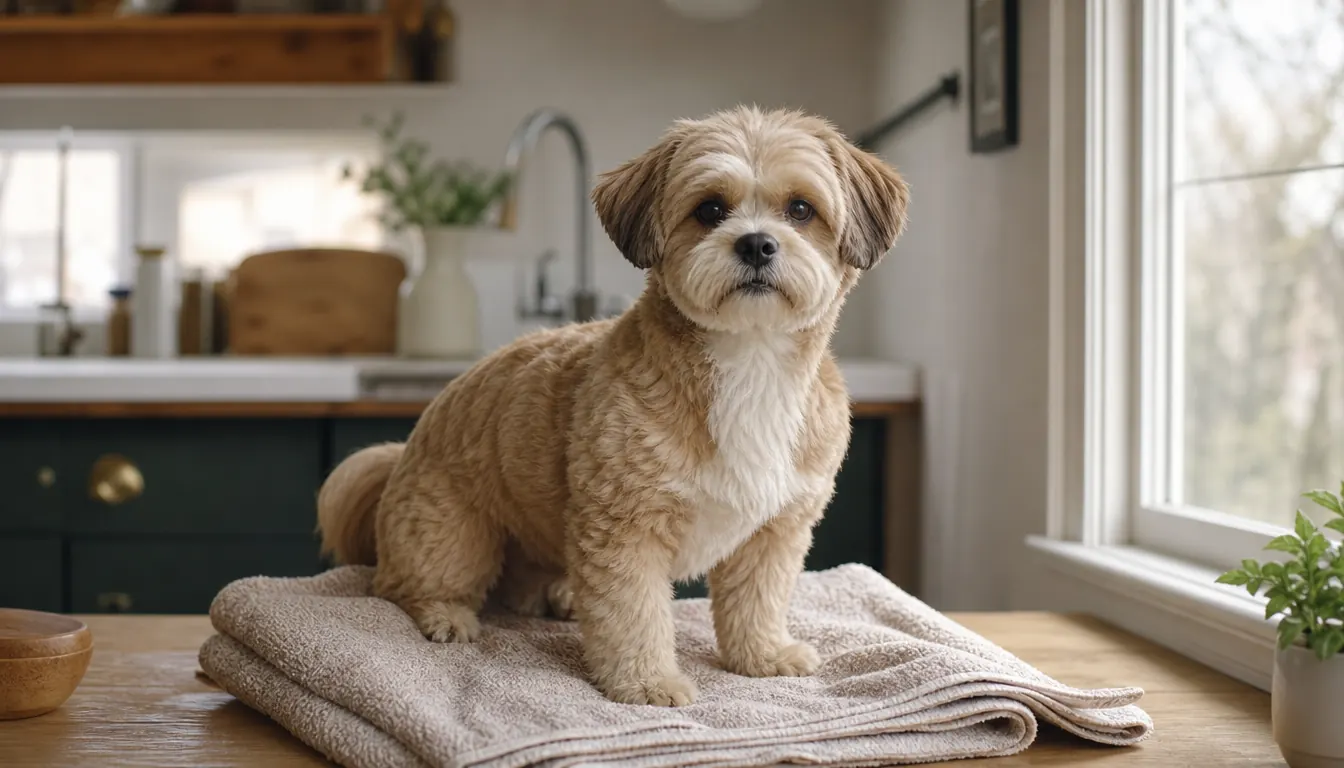
Lulu is a seven-pound Maltese, seven years old, and she mats in exactly three places every single week: behind her ears, under her front legs, and the backs of her hind legs. For a long time I brushed her with whatever came in the grooming kit. Then last fall my groomer turned Lulu's head toward the window, showed me the felted little knot behind her left ear, and said the brush was simply too wide for a dog that size. I bought the Coastal Pet Li'l Pals slicker brush on the way home, and it has lived in my kitchen drawer ever since.
Here is what a year of using it has taught me. Five to ten minutes most evenings, on a folded bath towel on the kitchen table. A small slicker is not a shrunken version of a big brush. For a coat like Lulu's it is the right tool, and these are the ten reasons I would hand it to any Maltese owner doing the brushing at home between groomer visits.
Start where the mats start, which is behind the ears
One size, 3.25 by 7.25 inches, flexible wire pins with coated tips. Small enough to lay flat against a seven-pound dog's ear without dragging her whole head around.
Amazon Check Today's Price on Amazon →Maltese hair mats instead of shedding, and a slicker is built for that
Lulu does not shed the way a Lab sheds. Her hair grows, and when it is not brushed out it folds back on itself and felts. A slicker is made for exactly that job. The Coastal brush has flexible wire pins that catch loose hair before it wraps, and the listing calls the benefit detangling, which is the plainest honest description I can give you. After an evening session what comes off the brush is a soft little pad of hair. That is hair that would have been in a knot by Sunday.
The small head gets at the pea-sized tangle behind the ear
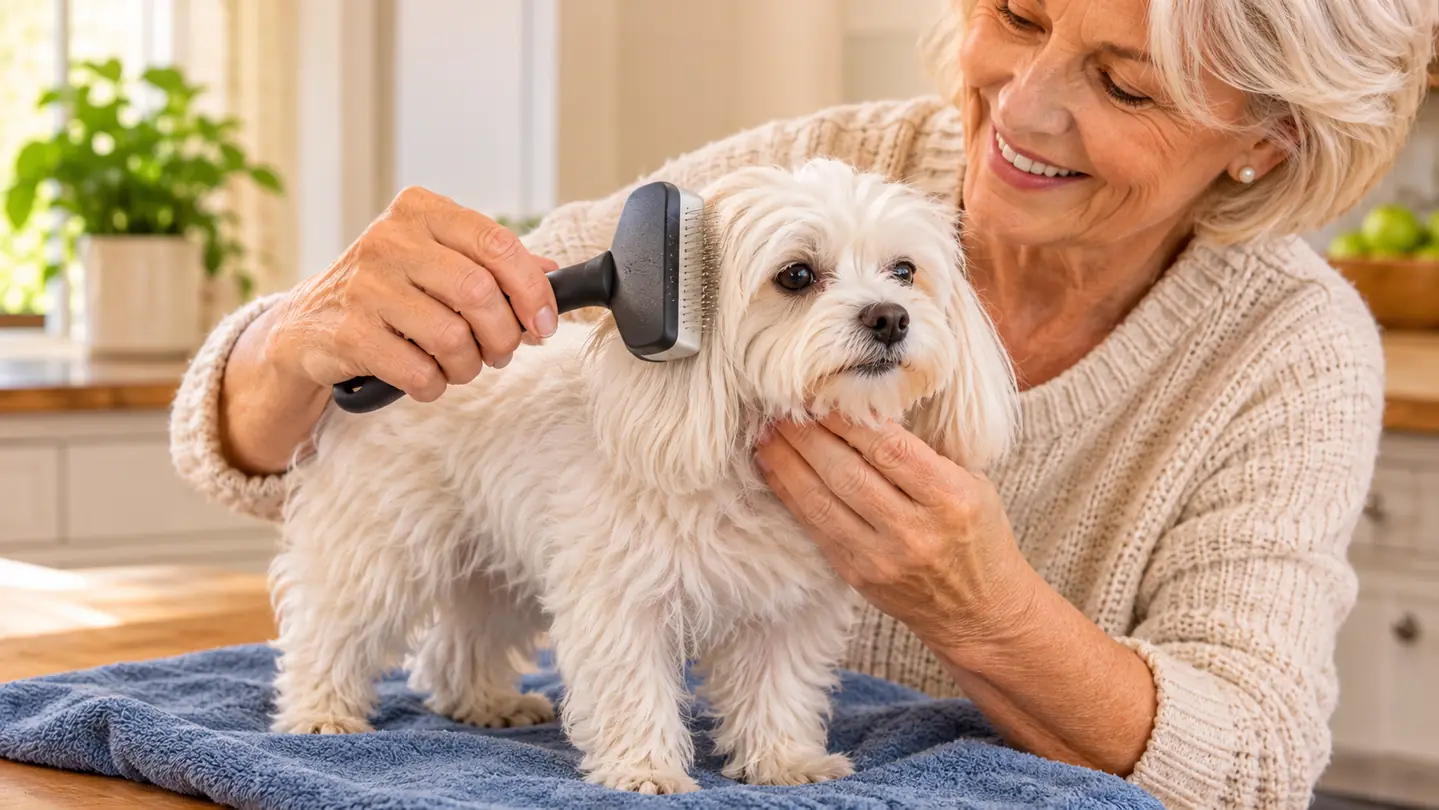
The mats behind Lulu's ears never start big. They start as a pea-sized tangle at the base of the ear, where the coat is finest and the collar rubs. A wide brush skates right over that spot. This head measures 3.25 by 7.25 inches, so I can lay it flat against the ear and work one small patch without pulling the rest of her head sideways. Twenty seconds there saves me a session with my fingers and a lot of apologizing.
Flexible pins follow a seven-pound ribcage instead of jabbing it
A small dog has a small ribcage and very little padding over it. The pins on this brush are wire and flexible, so they give when they meet a curve rather than driving straight down. I brush along her flank in the direction the hair grows and the brush follows the shape of her body. With the wider brush I used for years, I could feel the pins hit and stop.
The coated tips are kind to thin skin under the eye and in the armpit
Every pin has a plastic tip, and that matters more than it sounds when you are brushing an armpit. Lulu's skin there is thin and pink and she complains the instant something scratches. The coated tips glide instead of catch. I still go gently and I still watch her face. But I am no longer leaving pink marks along her belly, which I did once with a brush that had bare wire ends.
It works in sections the size of a fussy dog's attention span
A little dog does not give you twenty minutes. Lulu gives me about eight before she steps to the edge of the towel and looks at the floor. So I work in small sections: the size of a postage stamp behind each ear, then one armpit, then the backs of the legs. A small head makes that practical. Each section gets twenty or thirty short strokes and then we are finished with it and moving on.
The loose hair ends up in the brush, not in the couch cushions
Hair this brush lifts has to go somewhere. It goes into the pins, and then from the pins into the wastebasket, which is where I want it. Not into the crease of the couch cushion or onto the dark throw rug in the living room. I pull the collected hair out in one soft piece after each session and drop it in the bin. Ten seconds, and the house looks like a house instead of a dog's bedroom.
It resets the puppy cut so she stops looking uncombed
Lulu wears a puppy cut, shorter through the body and a little fuller on the legs, and it looks tidy for about ten days. After that the leg hair lies in three different directions and she looks neglected even when she has just been brushed. Running the Coastal slicker down each leg, in the direction of the cut, puts the hair back where the groomer left it. It is the difference between a groomed dog and a rumpled one.
It moves the coat's natural oils around, and the coat feels softer for it
The listing says the brush stimulates natural oils and distributes them evenly for a soft coat, and I think that is what I am seeing. Lulu's coat has a bit more shine than it did a year ago, and it feels less like cotton and more like hair. I am not going to pretend a brush is a conditioner. But regular brushing with a tool that actually reaches the skin does seem to do something.
It weighs under an ounce, which matters at sixty-three
The brush comes in at 0.96 ounces. My wrists are sixty-three years old and they know it by the end of the day. I can hold this one over the kitchen table for ten minutes without my hand cramping, and that was not true of the heavier brush in the grooming kit. Small thing, and I notice it every single evening I do the job.
It lives in the kitchen drawer, so the brushing actually happens
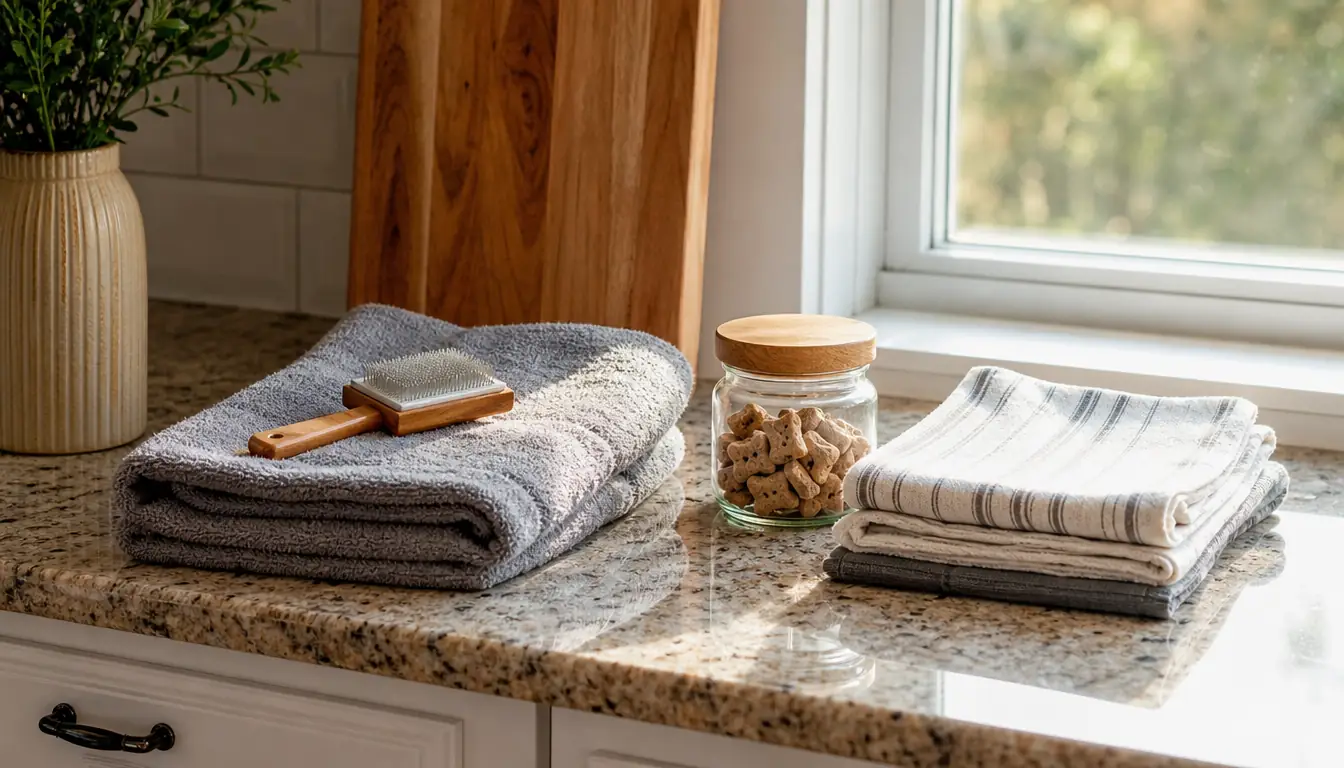
None of this works if the brush is in a cupboard upstairs. Mine sits in the kitchen drawer by the dish towels, next to the scissors and the little jar of treats. The towel goes on the table while I am waiting for the kettle, Lulu gets lifted up, and we do five minutes. The best grooming tool is the one within arm's reach at the moment you have a free hand.
What I'd Skip
Two things I would not spend money on again. The first is a full-size slicker. I used a wide one for a month and it did nothing for Lulu that the small one does not do, while making it harder to reach behind her ears and under her elbows. If your dog is under ten pounds, a small head is not a compromise. It is the entire point.
The second is brushing a tight mat. A slicker loosens a tangle. It will not dissolve a felted knot, and pulling at one with any brush hurts and teaches the dog to dread the towel. If I find a mat I cannot work apart with my fingers in about a minute, I stop, I put a little conditioner on my fingertips, and I leave it for the groomer. That is not a failing of the brush. That is knowing what it is for.
The knot behind her left ear used to take four passes with a wide brush and a lot of apologizing. Now it takes about twenty seconds of small strokes, and she stops trying to climb off the towel.
The brush that fits behind the ears, not just over them
3.25 by 7.25 inches, flexible wire pins with plastic-coated tips, plastic handle and a shape that wipes clean after every session. Mine lives in the kitchen drawer by the dish towels.
Amazon Check Today's Price on Amazon →