
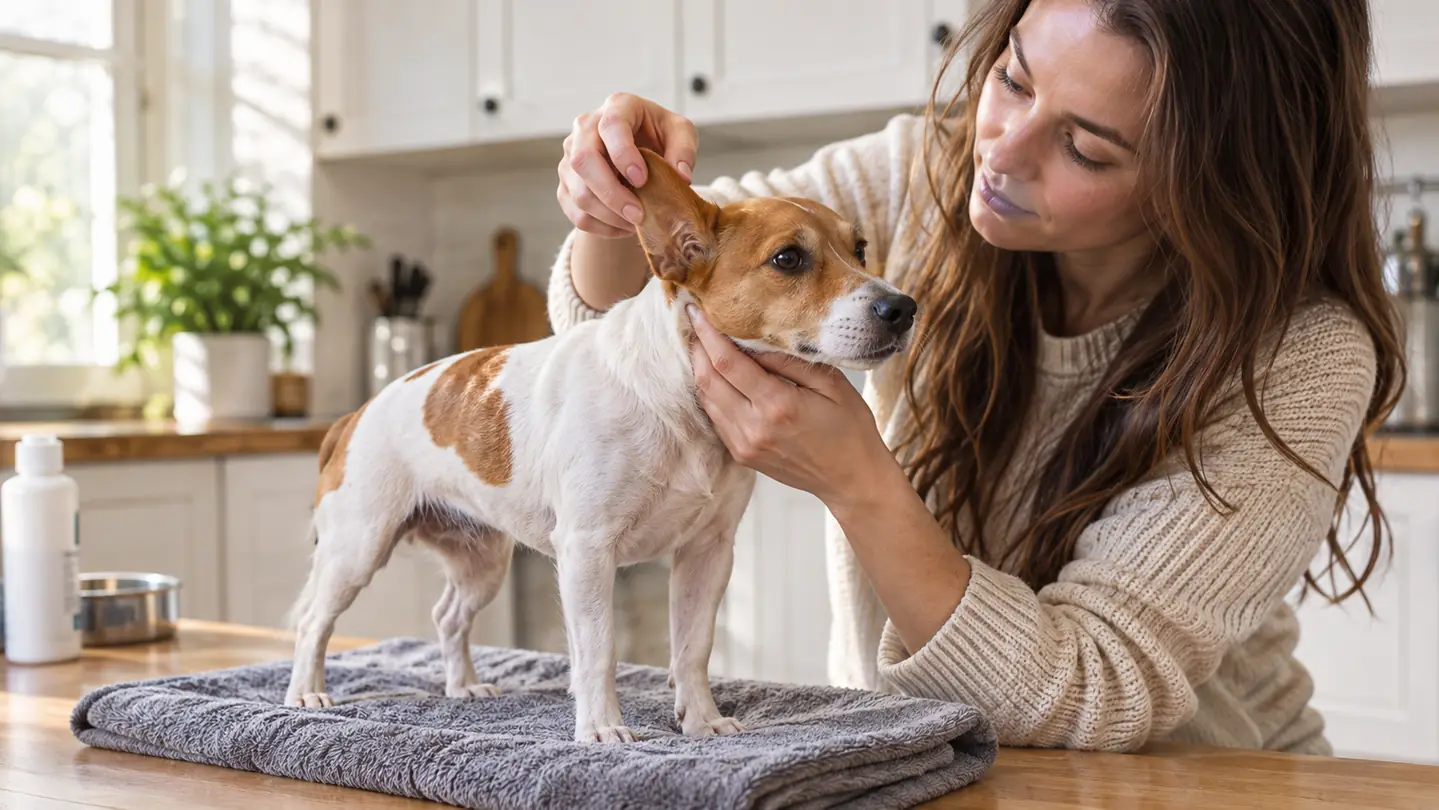
Lulu mats in exactly two places, and the worse one is right behind her ears. I found the first knot last fall while we were watching a movie and I was rubbing the spot where her ear meets her head. It felt like a hard little pea under the fur. Eight days later, at her grooming appointment, that pea had flattened into a shell of felt stuck to the skin, and the groomer worked it loose with her fingers and gave me a look. Brush that spot every night, she said. Not every other week. I had been brushing Lulu three times a week for four years and thought I was doing fine.
I bought the Coastal Pet Li'l Pals slicker brush the following week, about a year ago, and it has lived in the kitchen drawer by the dish towels ever since. It measures 3.25 by 7.25 inches, small enough for a seven pound dog, with flexible wire pins that have plastic coated tips. That last part matters more than I expected. Lulu has skin you can see through the coat, and a sharp pin under her ear produces a yelp and then a dog who will not sit still for a month. The whole brush weighs under an ounce, which sounds like a small thing until you are holding it out in the air for five minutes at a time.
The small brush that finally got the space behind Lulu's ears
Small pins, coated tips, about 3.25 by 7.25 inches. Sized for a seven pound dog instead of a Labrador, which is the whole reason it works under an ear.
Amazon Check Today's Price on Amazon →Before You Start: What a Mat Actually Is
A tangle and a mat are not the same thing. A tangle is hair crossed over hair, and it opens when you pull on it. A mat is hair that has wrapped around itself and then around the loose undercoat trapped underneath, and as it tightens it pulls the skin up with it. That is why dragging a brush through one makes a dog cry out, and why the skin under a bad mat can look pink and sore once you finally get it apart. The one behind Lulu's left ear last November was the size of a lima bean, with a hard core in the middle that felt like a knot in a shoelace.
Which brings me to the rule I wish someone had given me two years ago. The Coastal brush loosens tangles, removes loose hair and smooths a coat. It does not cut a mat open. Nothing in my kitchen drawer does. If the mat is tight against the skin, larger than a dime, or if Lulu flinches when I touch it, that one gets left alone and mentioned at the next appointment. Knowing that in advance saves you from the worst version of this job, which is fighting a losing battle at nine at night with a dog who has stopped trusting your hands.
Step 1: Find the mats with your fingertips, not your eyes
Run the flat of your fingers, not the tips, along the base of the ear and then follow the ear leather down toward the jaw. Do the same under the front legs, along the backs of the hind legs, and at the tail base. A mat feels like a pea or a small coin under the coat, and you will find it faster by touch than by parting fur and squinting. My first attempt at this used a plastic comb I keep in the bathroom drawer, and all it did was skim the surface and pull. A comb cannot find anything under a coat that has already clumped. Fingers can, and they tell you how bad it is before you commit a brush to it.
On Lulu it is always the same two spots. The left ear is worse, because that is the side she sleeps on, and the right ear is milder. Parting the coat and looking does not show me much on a white dog, but my fingers find both in about twenty seconds. I do this check on a Tuesday, on a Thursday and on a Saturday, whether or not I plan to brush her that night, because a mat I catch on the first day is a mat I can actually get out. One I find on the fourth day is a mat I am handing to the groomer.
One thing to check while your hands are there. If the skin beneath the mat looks red, broken, or smells, stop and call your vet. That is not a brushing problem, and no brush in my drawer will fix it. Lulu had a sore spot behind one ear two summers ago and I brushed right over it before I noticed, which is a mistake I have not repeated.
Step 2: Set up the towel and the light before you touch the dog
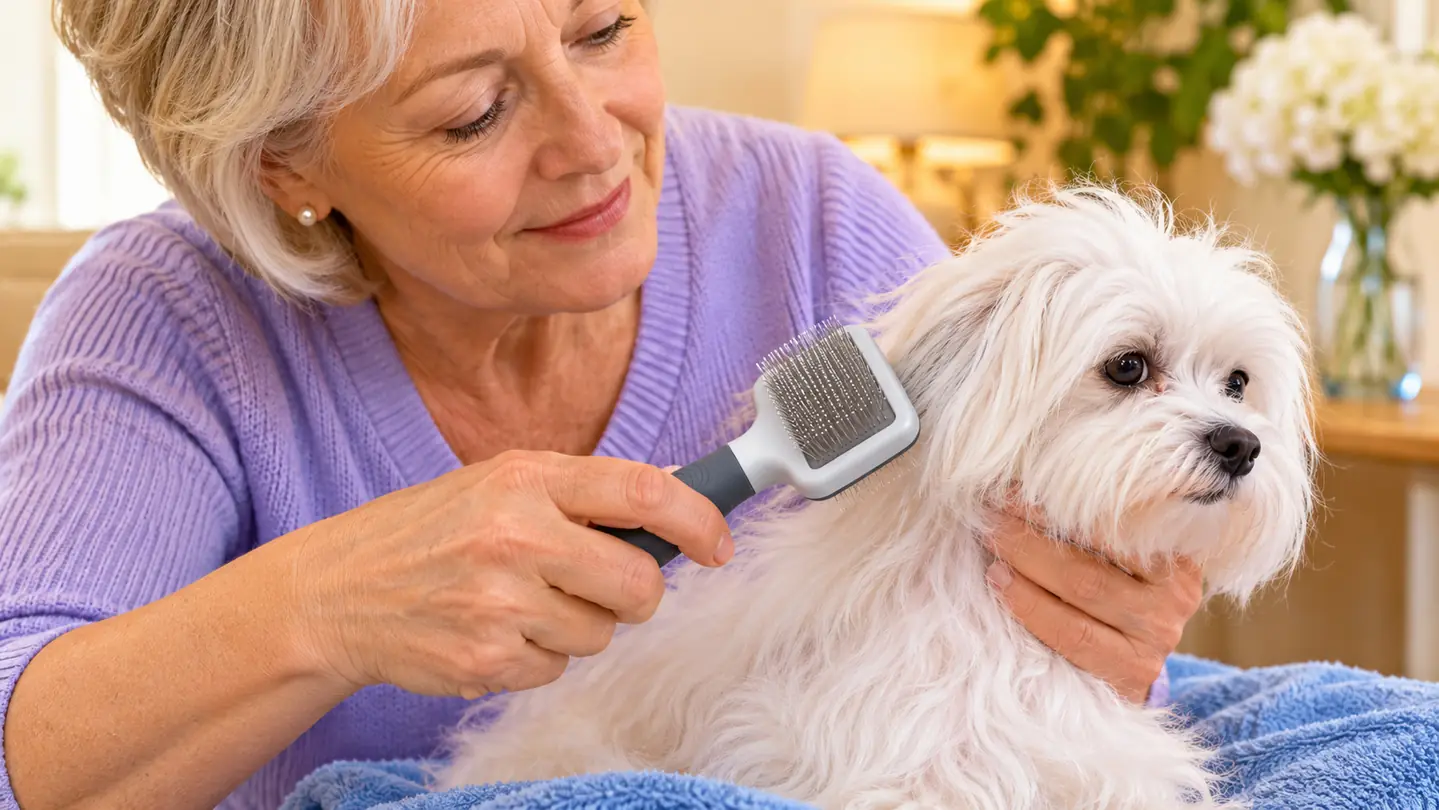
I fold a bath towel twice and lay it on the kitchen table, and Lulu gets lifted up onto it. She settles immediately now, because the towel means brushing and not the sink. That distinction took a while to build, but she has it. Daylight from the window over the sink is enough light to see what I am doing, and it is kinder than the overhead fixture, which throws a shadow from my own hand right where I need to look.
Before she is on the table, everything comes out of the drawer. Brush, three small treats, and a damp paper towel for my hands. Reaching for something while a seven pound dog is standing on a table is how dogs end up on the floor, and how a five minute session turns into a ten minute chase. I sit in the same chair every time, on the long side of the table, with the wastebasket at my foot. Ten seconds of setup saves me the whole evening.
Five to ten minutes is my limit, and I try to end before she wants to get down. If she steps off the towel, we are done for the night. There is always tomorrow, and a dog who trusts the towel is worth more than a perfect coat. In the first month I pushed for ten minutes on both ears every single night and it backfired completely. She started ducking sideways when I reached for the drawer.
Step 3: Work the mat apart with your fingers first
Pinch the mat between your thumb and forefinger, close to the skin, and hold the hair below the knot so the pull lands on your hand instead of on the dog. Then pick at the outer edges with your thumbnail, working from the outside of the mat toward the middle. You are not trying to yank it loose. You are trying to break it into smaller pieces the brush can actually handle. Start at whichever edge moves most easily, which is usually the top, away from the ear canal.
If it does not give in about a minute, leave it. I mean that. Come back the next night and try again, and if it is still stubborn after three nights, it belongs to the groomer. Lulu has one spot near the base of her left ear that I have never once gotten out myself, and I have stopped feeling bad about it. The night I decided that, I had been picking at the same knot for twenty minutes, she had gone stiff under my hands, and I caught her ear when I got impatient. It took nine days of treats and short sessions to get her back on that towel without a flinch. The knot was not worth nine days.
And do not bathe a matted coat hoping the water will loosen things up. In my experience it does the opposite, and a mat that goes into the sink wet comes out tighter. Bathe the clean parts, work the mats dry, and let the groomer handle anything that has already set. I keep the shampoo for the legs and the muzzle and leave the ear coat alone until it has been brushed out.
Step 4: Brush in small sections, ends first, and hold the skin
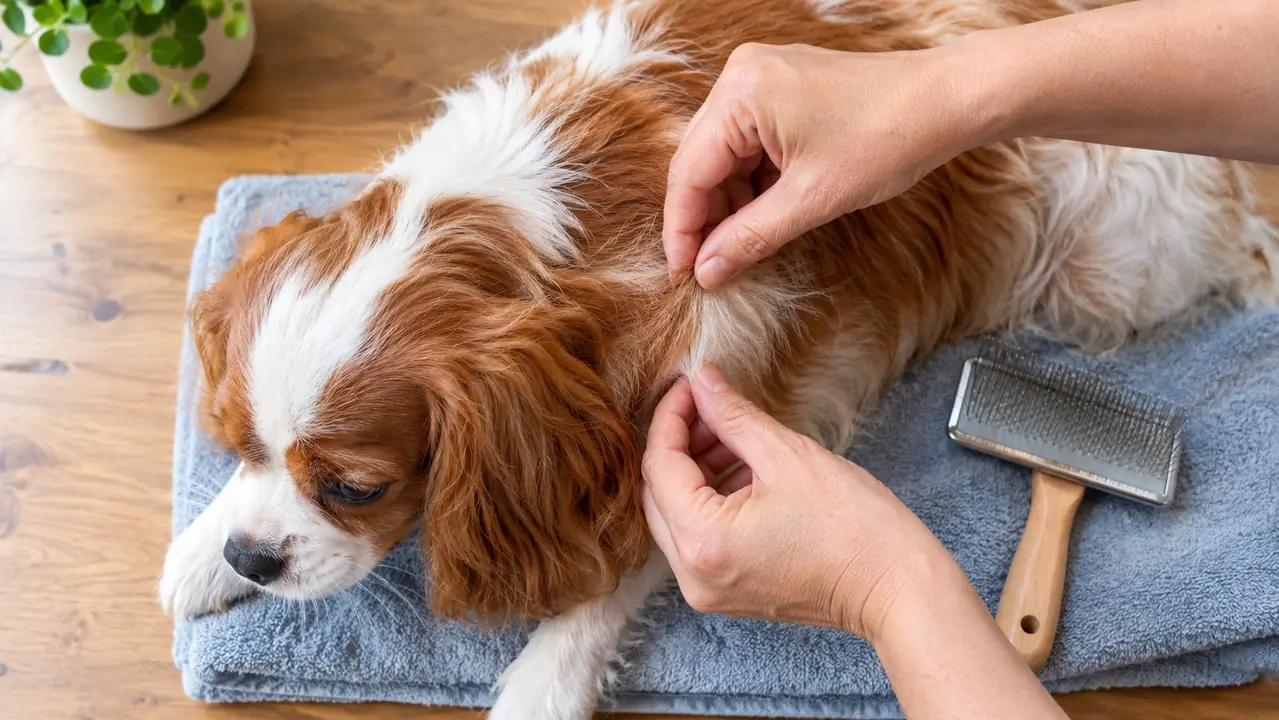
Now the Coastal brush comes out. The head is small and rectangular, which is the reason it fits behind an ear at all, and the flexible wire pins bend as they meet the coat instead of scraping. Lift the ear flap and brush the strip of coat underneath in the direction the hair grows, then let the ear drop and do the visible spot behind it. Six or eight short strokes is plenty for a single pass on a dog Lulu's size.
Section the coat rather than brushing the surface. Take a narrow band of hair, no wider than your first two fingers, run the brush through the ends first, then work closer to the skin in short strokes. Hold the coat below the section with your free hand the whole time, so if the brush catches, the tug stops at your fingers. It is slower this way and it is the only way I have found that does not end the session early. The area behind one ear takes me about ninety seconds when it is clean and closer to four minutes when there is something to work out.
Clear the pins every few strokes. Hair loads up in the wire quickly, especially on a coat that is shedding, and a brush packed with fur just polishes the top layer. I pull the hair out with my fingers and drop it straight into the wastebasket beside the table. Ten seconds of cleaning for every minute of brushing is about right. When I skip it, I can feel the brush start to skate across the coat instead of grip it, and that skating is my signal to stop and clear the pins.
The mats behind Lulu's ears stopped turning into shells somewhere in the second month, and the groomer noticed before I said a word about it.
Step 5: Stop while it is still pleasant, and note what you skipped
Finish with a treat even if you only got through one ear. Put the Coastal brush back in the drawer. Then, and this sounds fussy but it is the step that made the difference for us, say out loud what you left undone. Left ear base, still tight, groomer. Two weeks of doing that gave me a record, and the record is what showed me the mats were shrinking instead of just moving around. I keep it on the back of the grocery list on the refrigerator, one line a night, four or five words.
Lulu gets brushed most evenings, always behind the ears, always the armpits and the backs of the legs, usually two or three minutes and never more than ten. On a bad night it is one ear and a treat. Consistency does more than the length of any single session. The weeks I drive up to my daughter's, Lulu goes three or four days without a pass, and I can feel the difference the night I get home.
She still goes to the groomer every eight to ten weeks for a full cut, and I still hand over the spots I could not get. The difference is that there are fewer of them now, and the ones she finds are smaller than the shells I used to bring in. Last April she found nothing behind either ear, which had not happened in the four years before that.
What Else Helps
Keeping the coat shorter is the single biggest help, and it is not close. Lulu wears a puppy cut most of the year, and the two months when her coat runs longer are the two months I find mats in places I forgot to check. If your dog mats easily behind the ears, ask for a shorter ear trim and save yourself the fight. It is also easier on the dog than working out a set mat, which is worth asking your groomer about before you decide.
A bath every two to three weeks in the kitchen sink helps because loose hair rinses out before it can wrap around anything. I dilute a small amount of shampoo in a cup of warm water, lather, and rinse twice, and I brush the coat out gently once it is fully dry. Not damp. A damp coat plus a slicker brush equals a dog who leaves the table. The one time I tried brushing Lulu while she was still damp, the pins dragged, she scrambled off the towel and skidded on the linoleum.
The other spot worth a daily pass is under the eyes, where damp gunk collects and the coat clumps. One unscented wipe under each eye in the morning, from the inside corner outward, takes ten seconds and keeps that area from turning crusty. It has not erased Lulu's old tear staining, which only faded as the groomer trimmed it out, but it has kept the fur from sticking together. And the towel on the kitchen table does the rest of the work, night after night, same chair, same drawer, same five minutes.
Start with the left ear tonight, not the whole dog
One small slicker brush, coated tips, 3.25 by 7.25 inches, about the size of a cell phone. Five minutes on a folded towel is the entire routine.
Amazon Check Today's Price on Amazon →